Summer Umrah brings its own set of challenges. Temperatures in Makkah and Madinah regularly exceed 40°C between June and September, the crowds are dense, and the physical demands of tawāf, sa’ī, and travel between sites are significant. Packing right is not just about convenience — it directly affects how well you’re able to focus on your worship. This guide covers everything you need to pack for Umrah in summer 2026, organised by category, with practical notes on what to prioritise and what to leave behind.
The temptation when packing for any trip is to overpack. For Umrah in summer, the opposite approach is better. Every extra kilogram you carry is weight on your back during tawāf. Every unnecessary item in your bag slows you down.
The guiding principle: pack light, pack purposefully, pack for ibādah.
Iḥrām and Clothing
For Men
- At least one extra iḥrām cloth — carry a spare. If your first set becomes soiled or damaged before you complete your rites, having a backup saves significant stress
- 1 light jacket or hoodie — for air-conditioned hotels, the Haram, and evening temperatures which can drop
- Comfortable walking shoes — you will walk several kilometres especially when doing ziyarat; prioritise support over appearance
- flip-flops — for in Ihram, going for prayers, wuḍū areas and hotel use
For Women
- 3–4 abayas or modest long dresses — light-coloured, breathable fabric (white, cream, or light grey absorbs less heat than dark colours)
- Multiple khimārs or hijabs — sweat is inevitable; pack enough to change daily
- Comfortable, supportive walking shoes — closed-toe recommended for protection during busy periods
- Sandals — for indoor and hotel use
Tip: Avoid brand new shoes for Umrah. Broken-in, comfortable footwear prevents blisters that can seriously limit your ability to complete sa’ī and tawāf.
Documents and Essentials
These should be with you at all times — ideally in a secure bag worn on your person rather than left in your room.
- Passport — keep a digital scan stored securely online as a backup
- Umrah visa — printed copy and digital copy
- Flight tickets and hotel booking confirmations — printed copies are worth having even if you have digital versions
- Emergency contact list — written down, not just stored in your phone
- Small amount of Saudi Riyals in cash — for small purchases, sadaqah, and situations where card payments aren’t accepted
- A debit or credit card with no foreign transaction fees
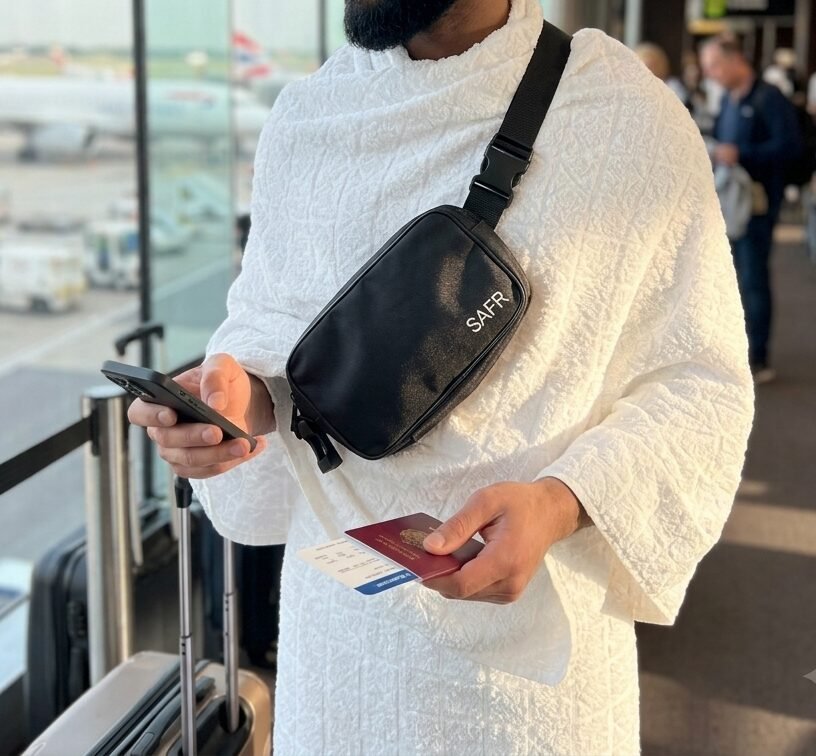
Looking for an Ihram belt that secures your ihram and carries your essentials?
The SAFR Manāsik Sling combines the functionality of an ihram belt and a travel sling in a single lightweight design.
Personal Hygiene
- Unscented soap and shampoo — required while in the state of iḥrām; scented products are not permitted
- Unscented deodorant — essential in 40°C heat; confirm it is fragrance-free before packing
- Toothbrush and toothpaste
- Wet wipes — invaluable for refreshing between wuḍū; choose unscented
- Small travel towel — quick-drying microfibre towels pack small and dry fast
- Nail clippers and small mirror
PLEASE NOTE: You can only use some of these things after coming out of IHRAM* – Consult a Scholar if unsure.
Health
- Any prescription medication — bring more than you think you’ll need; pharmacies in Makkah exist but finding specific medications can be difficult
- Paracetamol or ibuprofen — for headaches and muscle soreness from extensive walking
- Oral rehydration salts (ORS) — dehydration is a serious risk in summer; ORS sachets are small and light
- Blister plasters — pack more than you think you need
- Antiseptic wipes and a few plasters — for minor cuts or abrasions
Important: Zamzam water is freely available at the Masjid al-Ḥarām and throughout Makkah. There is no need to pack water beyond what you need for your journey to the Haram. Focus instead on staying hydrated throughout the day.
Electronics and Connectivity
- Mobile phone and charger — your navigation tool, camera, and communication device
- Portable power bank — long days at the Haram mean your phone will drain; a compact power bank is one of the most useful things you can pack
Worship and Spiritual Essentials
- Pocket Quran or Quran app (recommended) — many pilgrims find a physical pocket Quran meaningful; others use apps, from a fiqh perspective carrying physical copy of Quran requires deligience and extra care.
- Du’ā booklet — a small printed du’ā guide for tawāf, sa’ī, and other acts of worship
- Tasbīḥ (prayer beads) — for dhikr during rest periods
- Prayer mat — small, lightweight travel prayer mats or can be brough in the blessed city
Your Route Affects How You Pack
Not all Umrah journeys are the same, and your flight route has a direct impact on how much you can or should carry.
Direct Flights (e.g. Heathrow or Gatwick to Jeddah)
Direct routes are the most straightforward from a luggage perspective. You check in once, you collect once, and there’s no risk of bags being delayed or misrouted at a connection. If you’re flying direct, you have more flexibility to check a larger bag and pack the full list above without much compromise.
Connecting Flights (e.g. Manchester via Istanbul, Dubai, or Doha to Jeddah)
- Baggage allowances may differ by leg — your Manchester to Istanbul ticket may be with one carrier and your Istanbul to Jeddah with another. Check each leg’s allowance separately; they are not always the same
- Connection time matters — a short connection (under 2 hours) means your checked bag may not make the transfer, particularly at busy hubs like Istanbul or Dubai. If your connection is tight, consider carrying essentials in your cabin bag rather than checking everything
- Long connections (4+ hours) — if you have a long layover, you may want a change of clothes or essential toiletries accessible in your hand luggage, especially if you plan to freshen up at the airport
For Men: Where You Enter Iḥrām Affects What You Need Accessible
This is a packing consideration that is easy to overlook. Men must enter the state of iḥrām before crossing the mīqāt — and depending on your route, that point may come at different stages of your journey:
- If flying direct to Jeddah — you will typically enter iḥrām on the plane before crossing the mīqāt boundary. Your iḥrām needs to be in your cabin bag, easily accessible before the announcement is made. It should not be buried in your checked luggage
- If connecting via Istanbul, Dubai, or Doha — depending on your routing, you may enter iḥrām at the airport before your final leg, or on the plane. Check with your travel agent or airline in advance so you’re not caught unprepared
- If flying into Madinah first — many pilgrims visit Madinah before Makkah, in which case you wont be putting ihram on until after your stay in Madina. Once you depart from Madina, you will be informed to put ihram on either from your hotel or at a stopover.
The practical implication: your iḥrām cloth, belt, and any unscented products you need for ghusl and preparation should always travel in your hand luggage, never checked in.
A Final Note on Packing for Umrah
The best packing list for Umrah is one that frees you to focus entirely on your worship. Every item you add should earn its place by serving that purpose. If something causes you to worry, adds weight without adding benefit, or has no clear role in your ibādah or wellbeing — leave it.
May Allah accept your Umrah, grant you ease in your journey, and return you safely to your family. Āmīn.
Please do remember us and the Ummah in your duas.
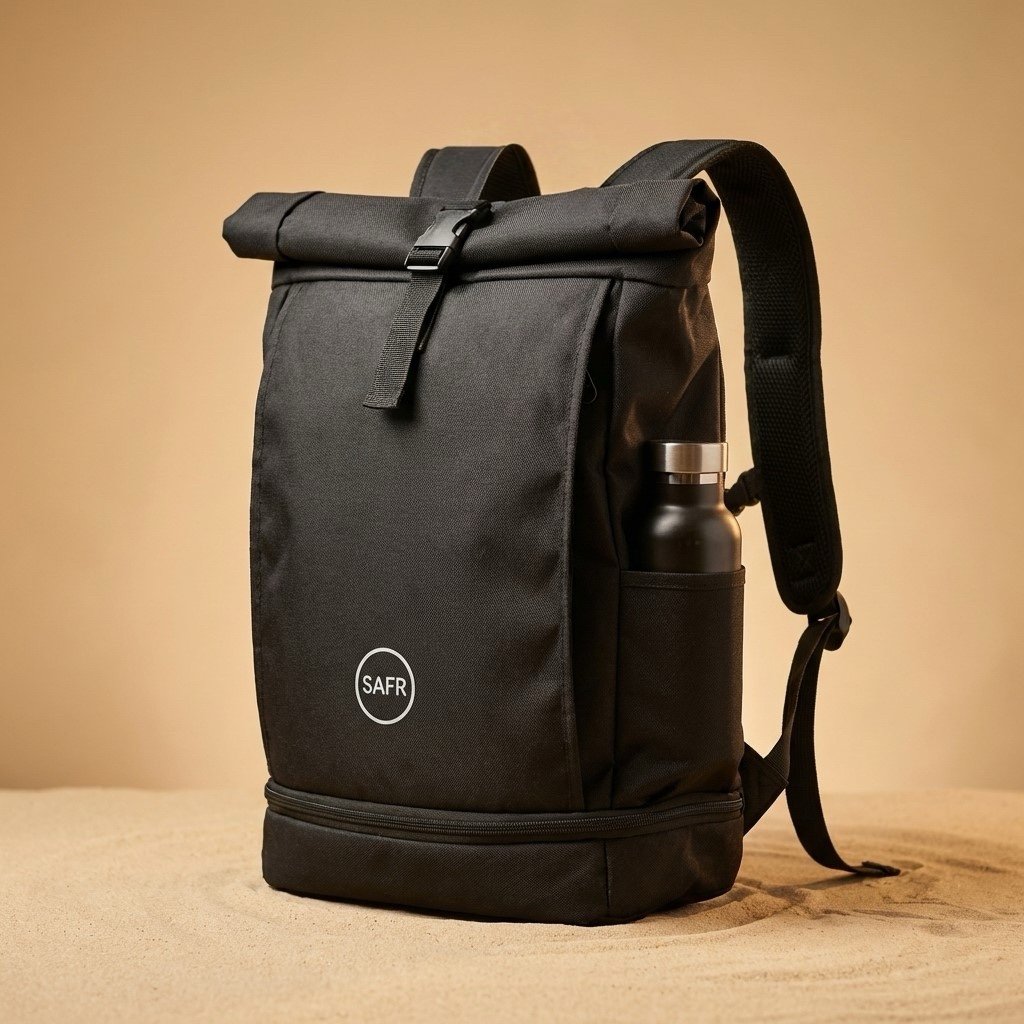
Looking for a bag built for pilgrimage? The SAFR Manāsik Backpack is designed for exactly this journey.